
Kilibreaux
-
Posts
216 -
Joined
-
Last visited
Never -
Days Won
2
Everything posted by Kilibreaux
-
I've had good results shooting them in a P22, GSG, 10/22 and Ciener 1911 conversion. Report and recoil are stout by .22LR standards, but so far I've never had one fail to chamber, go bang, or eject. Bolt thrust is certainly higher which enhances reliability. The heavy lead bullets seem to impact with authority.
-
The problem with the "tactical" is it's all about the "name" and nothing about performance, yet it certainly comes at a performance price. The "standard" these days - even with bulk ammo, is 1250 fps/40 gr. bullet, or some slight variation thereof. The CCI Tactical is listed at 1200 fps and comes in 40 round boxes...NOT what I call a better deal for my "tactical" weapons. I've got garden variety bulk pack ammo - copper plated, higher rated speed, less money and it goes bang every time. For the cost of CCI Tactical I'd rather buy Aguila Hypervelocity, or CCI Velocitors, OR (in the case of my ever-hungry Razorback belt fed), a lot MORE CCI Blazer which functions about as close to 100% as you can get. Unfortunately when one is looking at filling 500 round belts that go downrange "with a quickness," even the cost variation between brands and styles of .22LR matters.
-
Interestingly a lot of hunting guides carry a .22LR and claim it will handle anything they encounter. In reading and endless number of posts over the years I've noted people using standard .22LR ammo to dispatch Deer, Moose, and even Bear...and of course the .22LR has been used in a "sporting mode" to take every species of "game" on earth. My own experiences growing up in the south confirm that while we always aspired to have larger calibers, our inexpensive, single-shot Sears brand bolt action loaded with whatever was on sale for 50 cents a box took care of whatever was shot with it. The big calibers were certainly explosively impressive - the .44 mags, .30-30's, '06, and even the 7mm Rem Mag, but take away the departure of body parts and the ubiquitous .22LR would do the same job just fine, and this was BEFORE The modern era of hypervelocity ammo that is amazingly destructive by comparison. Aside from the priming method and heel-based bullet-to-case interface, the modern .22LR is a pretty sweet round that makes all the sense in the world for a "survival aresenal." The latest generation of "assualt" cartridges such as the 5.7x28 deliver .22 Mag kinetic energies in a more expensive package, while at the same time top-of-the-line .22LR ammo achieves approximately 2/3rds the energy of such rounds. Go back and watch the video of the Reagan attempted assassination - four people took hits from SHORT barreled .22 revolvers and not one jumped up and chortled; "that didn't hurt, what a punk round!" Reagan WOULD have died if not for quick response and modern surgery, Brady was "vegetablize," some DC police chief was dropped, as was a Secret Service agent who can be seen in the video taking an abdominal hit...he went down and didn't jump up bragging about how the puny .22 didn't do any damage. I have at least 5000 rounds of 7.62 on hand, and another 3000 of 5.56 not to mention ample 00 buck and slug loads, as well as .45ACP and 9mm for "the day," yet I have over 10,000 rounds of .22 ammo quietly awaiting the same catastrophe because it costs a LOT less money so I can afford to keep a lot on hand, EACH round will accomplish the same thing each round of the bigger stuff will, and I can "afford" to send out 15 rounds per second of .22LR easily by comparison to the big calibers. A five round burst of .22LR costs far less than just ONE centerfire round and delivers 650-1000 lb-ft of kinetic energy which is more than enough to make anyone pause and say, "oh!"
-
The SD parts will physically fit, but you would need the longer "carbine" barrel since this is what the SD suppressor housing is designed to cover. You could of course screw the faux suppressor on with the short "P" barrel but chances are you'd quickly discover the tube to be grossly misaligned...a feature I suspect designed to prevent attempting to use a shorter barrel in a modified faux suppessor tube. Having said all that, the real problem is your GSG started life as a "pistol" and I'm not sure you can legally transform it into a "rifle"...someone with more experience in the "SBR" business will have to advise on that one.
-
Zumzum5150, Nice looking GSG! I see you still have the factory rear and front sight and grip housing/selector. The rear drum is fairly pointless for actual shooting...it was nothing more than a modification to appease HK. Go here to find a REAL HK sight that has a proper aperture and is adjustable for elevation: http://rrages.com/sight/g3drum/index.htm ($29 shipped ain't bad) OF if you demand the "purist" MP-5 sight: http://rrages.com/sight/mp5sight/index.htm ($69 shipped) I have the first and like it a lot. A friend bought the more expensive model because he wanted the oversized aperture. Go HERE for the "conversion kit" if you want to install a proper RING front sight, smooth grip housing, and wide, paddle style selector: http://www.cdnninvestments.com/gs18cokitnew.html This also replaces the cocking handle with an HK spec "half moon" style. The only downside is you lose the camo pattern on your cocking tube because the original parts are black only (as with all original issue GSG-5's) however you GAIN a real front sight ring that compliments your REAR sight aperture (assuming you have mounted a genuine HK rear sight) and you end up with FAR, FAR better sighting. Another feature that comes with the conversion kit is a metal receiver top insert which does away - unfortunately with your plastic top insert which has two miniature screws holding that plastic rail on. The metal version however works correctly with all HK spec clamp-on type mounts including an anodized aluminum version...a LOT sturdier and actually secure. My friend has the camo pattern and he liked the look of the black cocking tube against the camo receiver. Also you can go to either: www.rrages.com or http://www.robertrtg.com/pofmp5greenstockset.html for the OD green version for REAL HK stocks which are quite robust and durable. Just a few ideas to help you along with your new toy...it's addictive to say the least.
-
Where to find replacement (factory) stock for GSG 5
Kilibreaux replied to redhawk's topic in GSG-522, GSG-5 General
This is the contact info for ordering factory parts for the GSG. Send him an email and he will send you the lastest price sheet and parts diagram. BEFORE you purchase an ATI replacement stock you might want to consider this: http://www.robertrtg.com/pofmp5blkbuttstockhandguard.html Original HK MP-5 buttstock for $48...solid, durable material, FAR superior to the GSG unit. Bilal Binici Import Administrator\CSR American Tactical Imports Phone: 585-328-0945 ext.107 Fax: 585-328-4168 Toll Free: 800-290-0065 ext.107 Email: bilal.binici@americantactical.us -
One of the items I addressed on my GSG was an overly thick firing pin nose. When I first got it I though the firing pin seemed a bit broad and so as part of my on-going work to refine the GSG to perfection I carefully stoned the pin to narrow its nose down to the same thickness as other .22's I own. Then I got around to ordering another firing pin as part of creating a supply of "spares" and discovered the replacement firing pin's nose is the same width as my original--as delivered! The new pin also shows a distinct bluish color indicating hardening and tempering. I don't know if this reflects indifferent quality control or perhaps an on-going process of product improvement but I'm impressed.
-
Trigger travel reduction
Kilibreaux replied to Kilibreaux's topic in GSG-522, GSG-5 Mods and Upgrades
Wow! The precision cut of your stop plate recess is amazing! I can see why you have zero slack because you held your cut outside the smaller hole. On mine I took it just a bit deeper and ended up with a tiny bit of take up. -
Trigger travel reduction
Kilibreaux replied to Kilibreaux's topic in GSG-522, GSG-5 Mods and Upgrades
Well, actually the sear spring tension remains unchanged. You see, the first 1/4" of trigger travel is purely for the purpose of moving the firing pin release lever (plate) forward, and secondarily retracting the trigger bar out from beneath the sear arm so as to allow the sear arm to move downward and release the hammer. During this rotation the sear is held solidly in contact with the cocked hammer due to the independent nature of the sear arm (housing), sear spring, and hammer spring, AND the trigger return spring via the firing pin release lever (plate) that serves to "set" the trigger forward of where it might be precisely to create "room" for travel to move those parts prior to sear release. Basically the trigger moves back, but the sear does not change position until a point is reached where the sear arm is pulled out of engagement by the trigger once the two have reach their "hard contact" interface. Now something you CAN consider with respect to the sear spring is adding a secondary coil of larger diameter around the primary spring...and this serves TWO important functions. The first is to increase "lifting force" on the sear arm during disconnection to eliminate multiple fires (and it works). Certainly this COULD be done by using a stronger single coil sear spring, but there is a secondary "benefit" of the dual coil set up. Because the second coil rests between the upper and lower surfaces it can also function as a trigger limiter...meaning it limits how far the trigger moves to the rear and thus becomes an "over travel stop." Also, we all have thousands of click pens lying around with springs in them that are easy to test versus going on the hunt for a special spring of equal diameter to the sear spring, with a heavier rating, thicker wire, longer length, etc. As you know the GSG has a rather long, mushy, indistinct trigger both ahead of sear release due to the internal design to use the initial trigger travel for secondary and tertiary functions, and AFTER sear release simply due to free travel with no over travel stop or limiter other than the trigger contacting the housing. The instant you eliminate a full 1/4" of front-end trigger travel you be even more acutely aware of how far it travels rearward AFTER sear release and the disconnector "snaps" also letting the trigger "jump" further back. Because of my previous modification to the sear spring - essentially making it a dual coil set up, rearward travel was already limited so once I did the current trigger travel mod my trigger suddenly became amazingly crisp and precise...slight takeup, nice snap release, slight overtravel. Now that you've mentioned the sear spring however, I have an idea...one can actually play with different length outer coils...(why not they come from click pens and so should be easy to find), and end up limiting trigger over travel quite nicely. Another way might be to look at drilling a small hole right beside the sear spring well and threading it to accept a small set screw which would allow one to finely tune trigger movement after the snap. Of course there are other ways to go about adding a trigger over travel stop, but as I said, trying a click pen coil spring...clip a coil at a time and fit it, then stop when the trigger will move far enough to release the sear (and a tad more movement). -
Trigger travel reduction
Kilibreaux replied to Kilibreaux's topic in GSG-522, GSG-5 Mods and Upgrades
Popcop45, Absolutely you can use a longer screw with small lock washers or flat washers. The original intent is to use an M3x.5 - 18mm machine screw with stacked washers to create the limiter stop, but then I realized I could just back the existing screw out in order to get the mod done and try it out. When the trigger housing is installed inside the grip housing it is held quite tightly together so once really could get by with the backed out screw, but it's not as refined a solution as the longer screw with washer stack. -
A couple of points: I agree with Imschur that the platforms have changed over the years, and this probably has as much to do with .22LR ammo problems as any changes in manufacturing quality. A perfect example is how FEW failures to fire I've experienced with my 25 year old 10/22 versus my much newer GSG-5 using the SAME ammo. I've had dud hits in the GSG that went bang in the 10/22. Not that the GSG can't be worked by a competent gunsmith to a much higher degree of reliability, but that is not what the average purchaser expects will be required. By the same token I don't remember my P22 EVER having a failure to fire with any brand...clearly the platform has MUCH to do with .22LR reliability. A second point is that with my basic selection of magazine fed auto-loaders I've been stocking the more expensive brands, yet with my Razorback I am forced to consider the least expensive simply because it can eat a thousand rounds in a matter of seconds. For this reason I gave CCI Blazer a try ($1.69/box) ordered in bulk and was quite surprised at the quality and reliability, but then the Razorback was built to fire the "cheap stuff." Again it seems the platform may have more to do with .22 reliability than the ammo.
-
Trigger travel reduction
Kilibreaux replied to Kilibreaux's topic in GSG-522, GSG-5 Mods and Upgrades
Impressive! I don't know why I didn't think of the trigger travel mod sooner because after doing it, it's like a different trigger has been installed! -
Trigger travel reduction
Kilibreaux replied to Kilibreaux's topic in GSG-522, GSG-5 Mods and Upgrades
Absolutely your plate will work. I left my plate "tall" because it provides a mounting point for potential future mods, but cutting the plate down "level" won't negatively impact this mod. I'm quite impressed with how much better the trigger feels now. The trigger always seemed mushy and indistinct, but now it has just the right amount of slack. Thanks again for the idea! -
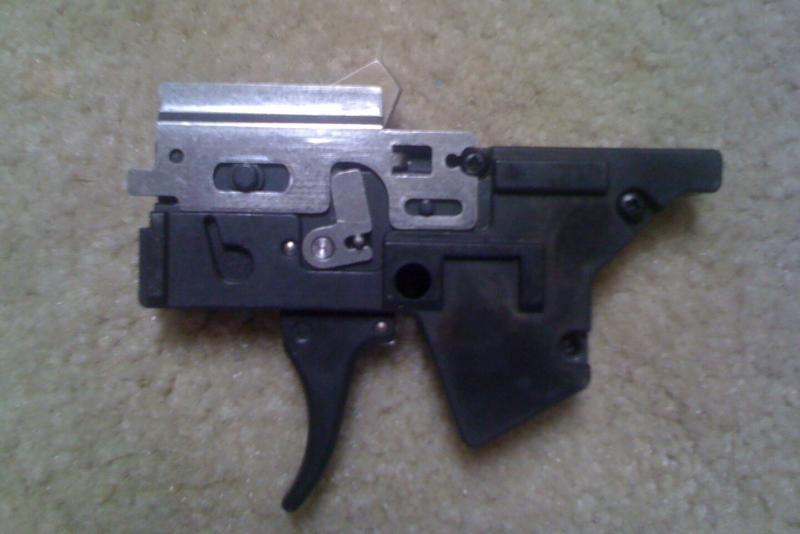
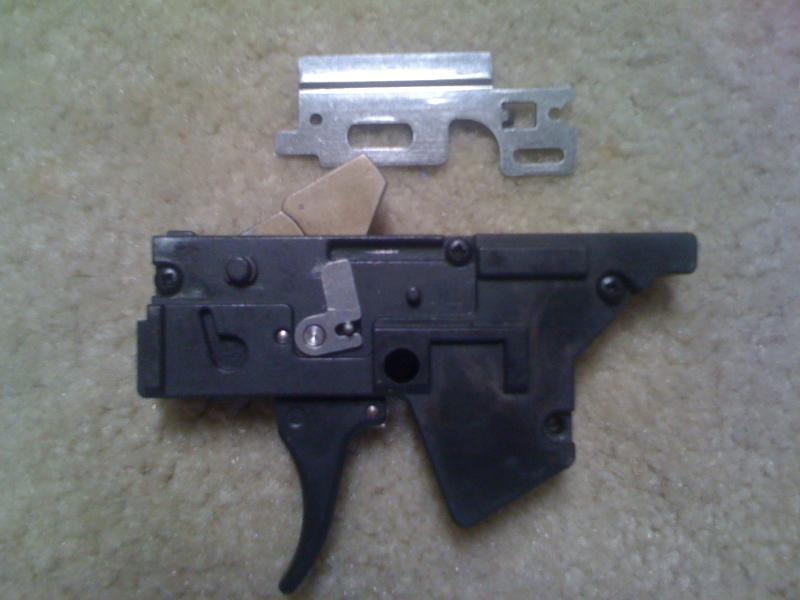
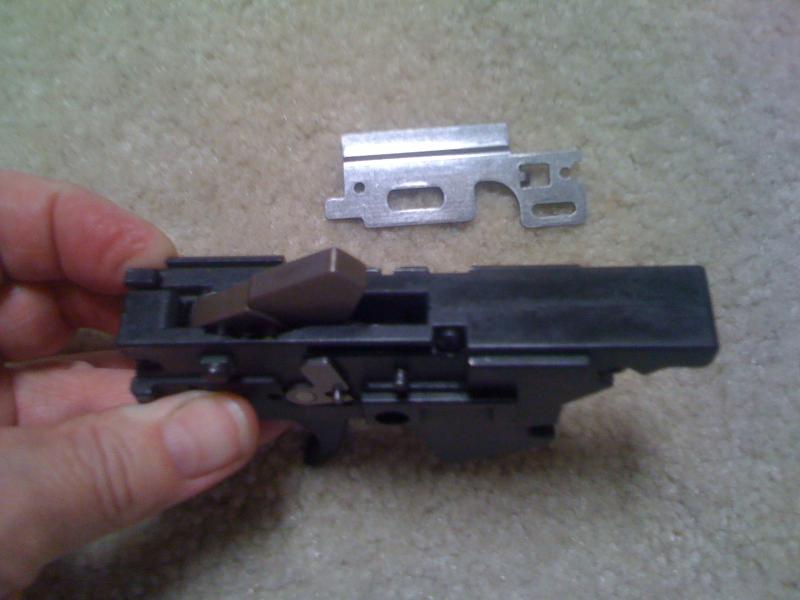
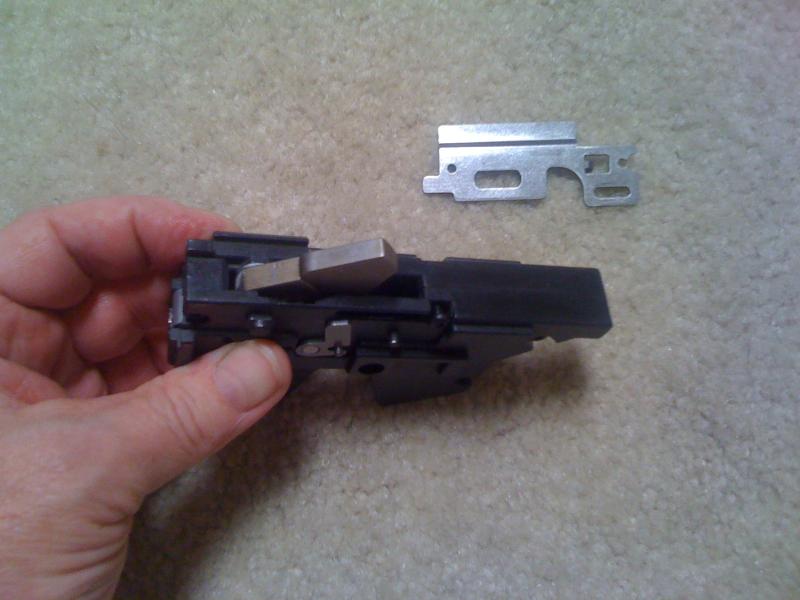
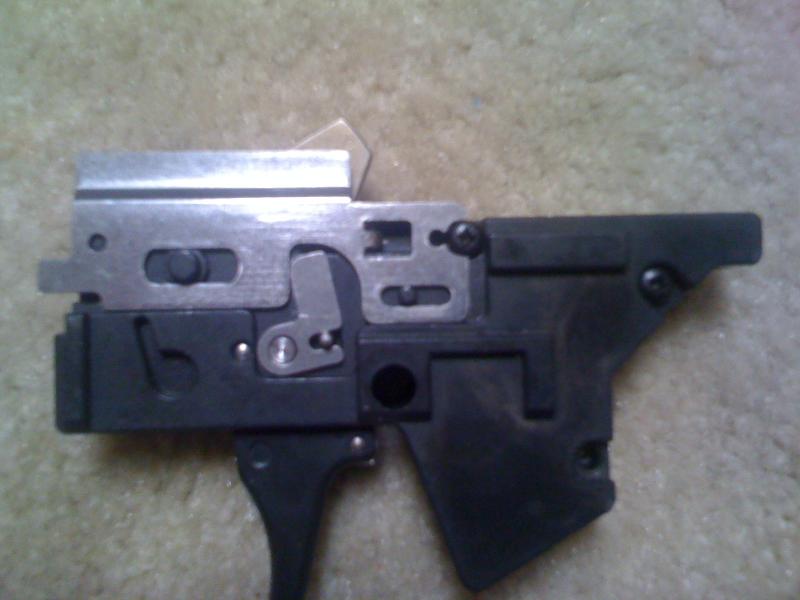
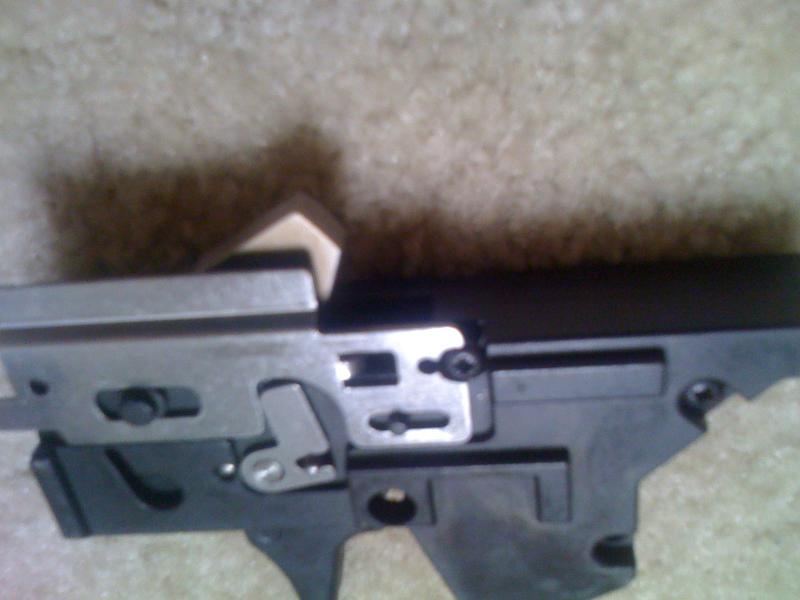
Dizzny1, I have attached some photos to help explain the trigger travel reduction mod. You can actually get away with backing out the upper screw because it can't back completely out when the trigger housing is installed in the grip housing. Hopefully the photos will clarify my lengthy explanation, but be aware this can only be done if you have removed the firing pin block and no longer need the upper portion of the plate...as you can see in the photo. I removed approximately .210" of trigger travel prior to sear release. It took me about 5 minutes to grind out the recess in the plate and complete the mod. The backed out screw is really not needed since the trigger housing "halves" are held tightly together while inside the grip housing. When I get time I'll go buy an 18mm M3x.5 machine screw to replace it, but as it it works perfectly! Now install as trigger stop to prevent the trigger snapping further back during disconnection and the GSG ends up with a VERY crisp (totally safe), short-stroke trigger. I want to thank you for proposing the idea because I too had thought the trigger had excessive movement but had not considered that once the firing pin release plate is cut down and no longer needed for that function, the initial 1/4" of trigger travel is also no longer needed.

-
Relatively new compared to all the upper conversion units, dedicated uppers, and airsoft derived "tactical" .22 rifles, the Razorback has to be the unannounced leader of all possible choices. First, it's built like a "real" gun since it makes no pretense of being something other than what it is - a Browning derived, belt-fed .22LR. The receiver and front trunion is made of massive slabs and blocks of aluminum VERY nicely parkerized with the front and rear mounting trunions welded in. The upper is enclosed by a sturdy aluminum rail unit with top cover latch and the top cover hinges to the front of the trunion. The barrel is a full .750" except where it passes into the trunion where it neck down to around 1/2" and is milled to fit into the T-slot of the bolt. The barrel goes in and out with a few turns on a single allen screw which is ample considering the close fitting of all parts, and of course the barrel is threaded 1/2-28 with AR style flash suppressor. There is absolutely nothing about the Razorback that implies "cheapness" or corner cutting to save a buck. It's built as well if not better than any military grade rifle. For a belt-fed semi-auto .22 upper that literally works "like a sewing machine" $695 is a steal considering the cost of much, MUCH lesser conversions and such. The Razorback is actually a "lower cost" version of the original LM-7 but lower cost doesn't mean they left anything out....the bolt is superior and many LM-7 owners use the new Razorback bolt over their original as they are interchangeable. So, how does it work? Simply amazing. I've seen the videos online, and like most who have delved in the world of .22's for years I figured it would probably be prone to functional issues....how wrong I was! The designer pared down the Browning 1919 system to scale for the .22LR, tossed out everything the little .22 doesn't need, added a few genius touches even John M. Browning would have admired, and came up with a .22 design that really does work, limited ONLY by the quality and reliability of what is being fired through it, but even with that, the basic operational design is such that a failure to fire poses no more fuss than a quick rack of the operating handle to load in a fresh round. A quick summary of how the Razorback works is in order: It has a classic style top cover with traditional, Browning style feed lever, upper feed pawl, and lower feed pawl, as well as a miniature feedway. The bolt is square with an angled slot on top actuate the feed lever as the bolt reciprocates, and the "extractor" hinges on the left side and acts to guide shells down the T-slot, but completely UNLIKE its name suggests, and the original, it does not actually "extract." Here the Razorback departs from classic Browning in having its T-slot extend fully to the top of the bolt with a rounded "window" to admit the .22 rim. As the bolt closes behind a belted round, the rim is gently pushed up by a bevel on the outside of the T-slot until it pops through the opening and drops down into the slot - just a bit, but more than enough for the T-slot to now become the actual belt extractor, with the extractor arm providing downward pressure for security. The bolt moves back pulling the round from the belt, the round being fully captured in the bolt face. Bolt moves back, extractor cams the shell downward, pushing the previous shell out the bottom, then snaps up as the T-slot and small U-spring hold the shell for a perfect presentation to the chamber. As the bolt closes the extractor is already back up ready to move over the next belted round. The small U-spring at the base of the bolt is another "genius" touch that provides a simple, yet perfect solution to a "complex" problem. Properly adjusted the T-slot and U-spring create seamless chambering, and the only "adjustment" one MIGHT make would be to the width of the U-spring's opening to fine tune the level of the slotted round's nose relative to the chamber. should the spring weaken it's an inexpensive replacement and easily fabricated in the field of needed. The extractor uses no spring just moves in a slot. A small cam located in the slot is spring-loaded by a simple, L-wire spring mounted from the outside....again, a simple solution to a complex problem that leads to reliability and ease of maintenance in the field (IF needed which isn't likely). The feed pawls are pure Browning and of course drive against the belted rounds to shuttle shells into position. The supplied fabric belts are superb examples of woven belt technology, hold the rounds securely and function with 100% reliability. So to do the polymer disintegrating link belts. A belt can just as easily be made by grabbing a 1/2" tubular "flat" shoelace and stitching loops into it....works 100%....take note that this "complex" belt fed .22LR feeds 100% even with home-made feed solutions! No worries about expensive plastic (cheap) magazines, and overly expensive plastic drums with crappy quality control because the makers of those figure the .22 is just a plinker toy anyway so why bother trying to make it to the same quality standard as "real" rifles. The designer/builder of the Razorback CLEARLY builds it to the standard of "Mill-Spec" as evidenced by the incredibly smooth functioning of the internals. And while most "tactical .22s" might see a few thousand rounds over a life of shooting...the Razorback can rip through thouSANDS of rounds in a single afternoon of shooting. A hundred round belt goes by as quickly as the average 20-something round magazine. Belts can be of any length...200, 300, 500, 1000, even 2000 rounds. Surprisingly a two hundred round belt fits in a VERY small space, and Lakeside Machine of course supplies belt feed boxs that mount up via the magazine well, so a 200 round belt is easily carried around and feeds flawlessly. Of course users have come up with more creative solutions that allow much higher capacity belts feeding from "belt bags" to be carried. When the belt is empty it simply drops away or is pulled out and stuffed in a pocket. Loading another belt is pretty fast and easy. The best part is the operational sequence. With most magazine fed .22's if a feed stoppage occurs one must retract the bolt and MAYBE pull the shell out, and MAYBE not have to drop the mag to clear the chamber. Same with a miss fire - yank the bolt open and MAYBE the extractor pulls out the dud round cleanly, but often not. The Razorback has no such issues. It ALWAYS chambers, and if the round fails to fire a quick pull on the operating knob extracts the bad and cycles in the good, dropping the dud shell right out the bottom. Here the belt-fed design does have an operating consideration that must be respected. Ammo length must fit within certain parameters as ammo too short will lead to failure to extract from the belt, and ammo too long could lead to failure to fire because it cannot be chambered to full depth (we're talking thousands of an inch), yet once understood this poses no problem because most round-nose profile ammo works just fine, and if one simply HAD to use shorter HP ammo a few small strips of tap on the front edge of the feed way will do the job. As for "power"...as in "can a .22LR operate a belt feed mechanism?" The answer is a resounding YES it can...easily. The mechanism can easily "lift" a 50 round belt (22.5" long) unsupported and feed with no problem, which means if one is feed from a bag or box with the belt S-looped it will self feed just fine and this is with "standard" ammo. For those who choose to add a suppressor it will have higher operational reliability, though I'm not quite sure how one goes beyond 100% feed reliability. For those used to futzing around with "so-so" magazines of dubious and known UN-quality, and never quite achieving that level of reliable feed desired, the Razorback belt-fed is an eye-opening experience...it works, and it works well. Because it is AR based, the Razorback can be ordered as a semi-auto only model or full-auto for use on registered lowers. UNLIKE all other .22 "conversions" (which the Razorback is not), if the full-auto model is pinned to a full-auto lower it will work right out the gate....yeah, there are tweaks and things people might do, or think they must do, but as delivered the full-auto version works...can't say that about too many .22s, not even about their BASE level of functional reliability. There is a video on YouTube of a 1000 round belt "dump"...non-stop. That's a LOT of shooting for any .22, and the Razorback is capable of doing multiples of those without a hitch. It's almost self-cleaning in how it works, and using a dry-film lubricant comes out almost "clean" after firing several hundred rounds....kind of hard to take the Razorback out and NOT fire hundreds upon hundreds of rounds....another testament to the ease with which this thing runs. I felt the "urge" to post this because is see so many posts about the same old thing, over and over again...same old 'tactical" uppers with their puny mag capacity, nothing "new" except allowing the owner to shoot .22LR in place of .223. The only two truly innovative "tactical" .22's on the market are the AM-15 and the Razorback because they add to the .22LR what it needs--capacity. The main deficiency of the AM-15 is limited capacity and an almost total reliance on expensive STORE-bought drums. The AM-15 is also outrageously priced. The Razorback puts the "complexity" of feeding in the gun itself, but does so in an elegantly simple way that enhances reliability. Feeding the gun is by relatively inexpensive belts or links, and if needed belts can be made even more cheaply and work BETTER than any factory .22 magazine I've ever encountered. In the world of "poseurs" the Razorback is the genuine article. ...the link above pretty much says it all.
-
110 Round "Rotary Magazine"
Kilibreaux replied to Kilibreaux's topic in GSG-522, GSG-5 Mods and Upgrades
Today I completely disassembled the drum. I planned to clean away all lubricant with the intent of using only dry lube after noticing the little "placeholder bullets" seemed reluctant to move smoothly. Sure enough the strip of "bullets" and channel inside was heavily gritted. I've already switched to dry lube for all other .22 uses since this does not attract and hold onto debris. Unfortunately I observed a stress crack on the right side of the tower right where both the small screw that holds the back on goes, and the long screw that mounts the tower to the drum body. Without doubt this area is going to fail completely at some point unless I repair it and look at reinforcing the outside. The design of the drum is great. The drum's operation is great, but the outer casing is of a rather fragile type of plastic, NOT what is used in the standard stick magazines. The drum tower seems to be made of the stronger ABS material like the stick mags, but the body is shiny black plastic and due to the small "neck" area where the tower fits into the drum the plastic body is prone to fracture. When I purchased the drum I did so knowing it was likely to be deficient in terms of construction, but aware that it would provide a good "pattern" for future development of a drum built to last. I've got a lot of experience working with ABS and fabricating complex parts so it looks like I'll soon be delving into reproducing the drum housing from a much higher quality ABS material which will also be substantially thicker, and able to hold up to being tossed around. For sure the 22 round stick mags have proven to be quite durable and reliable and for now that's the only mags to be relied upon for survival use. -
110 Round "Rotary Magazine"
Kilibreaux replied to Kilibreaux's topic in GSG-522, GSG-5 Mods and Upgrades
The spacing you see between loaded rounds is caused by the slotted "star" wheel inside the rear of the drum. The rim of each round slips into these slots thus creating the separation you observe through the view slots. The spacing is dictated by the need to cycle "layers" of shells down about two and a half turns, so the slot spacing becomes closer as each layer of shells moves inward. A purely "peripheral feed" type drum would have each round separated by much less spacing, but the GSG drum is a REAL drum in that it uses both a slotted feed wheel to achieve rotation and inward/outward movement, combined with a slotted "housing" to move the shells in spiral fashion from outside to in, and vice-versa. Where the GSG drum differs in that it uses a massive constant force "motor" spring that needs no winding after loading, and of course it loads single-round through the feed lips as opposed to an open back. -
110 Round "Rotary Magazine"
Kilibreaux replied to Kilibreaux's topic in GSG-522, GSG-5 Mods and Upgrades
I haven't gotten around to it yet but I plan to fabricate a padded drum carrier. The idea is to provide impact protection for the drum body through a closely fitted case and the drum will be usable with the padded case in place. Another benefit will be keeping out dirt and debris, and finally, the case will have its own QD fittings so it can be clipped on to a belt or pack. My initial thought was not to make the padded case so the drum can be loaded while inside, yet it occurs to me I can add a velcro "window" at the back to allow manual rotation. Also, the padded case also fits well with another idea of inserting a 1/4" machine bolt through the center axle and snug it down with a couple of large flat washers...when I say snugging it down I do not mean "tightening" but snugging it so the central bolt quadruples mag body integrity without creating internal binding. For those wondering what the hell I'm talking about, as delivered the drum has a hollow central spindle with a 6mm hex drive. The ONLY thing holding the case back on is four large and two small screws and while this is certainly sturdy enough for most, the first thing that jumped out at me was to run a bolt through the center...add a padded cordura, drum-shaped case and the drum will probably be able to withstand some pretty extreme shocks and bumps. Internally the drum is very well designed and built and clearly reliable. -
The only downside to the 110 round "drum" is the weight it adds. Even unloaded it's heavy because of the rather large coil spring inside. However the UP side is that mine has functioned 100%. The only "mod" I plan for the drum is to add a 1/4" diameter bolt through the center with large flat washers on each side to give ME more surety of it holding together. The other thing I plan is to make a padded, fitted bag for it to enclose it against dirt getting in while being carried in the field.
-
110 Round "Rotary Magazine"
Kilibreaux replied to Kilibreaux's topic in GSG-522, GSG-5 Mods and Upgrades
Do you mean the "rattle" after it's loaded? If so then the short answer is no, there's probably nothing you can do except maybe cobble up some sort of external enclosure like a soft, padded bag that would provide both protection and noise dampening. UNloaded the only thing moving around inside are those tiny plastic bullet "placeholders" that ride on a nylon strip so those can't be making much noise. -
Snakewrangler, If you have the bolt locked back and then release it, the bolt hold open lever should be "kicked down" by the spring located above it in that little slot. IF the bolt hold open is hanging the bolt open then there is something wrong with the spring that powers it. IF you have an empty mag inserted with the bolt locked open, then retract the cocking handle to release the bolt, the bolt will NOT release until you insert a magazine with rounds in it. The only way to release the bolt hold open is with a magazine containing ammo, or NO magazine inserted.
-
Snakewrangler, You should be able to remove the magazine disconnect with no modification whatsoever.. The washer that rides on the same pin as the hammer holds the hammer in place with no problem.
-
California .22RL AR15 Build
Kilibreaux replied to Alexanderthegreat's topic in AR-15,M16 .22LR Conversion Units
While I am not an attorney, I do have three brothers who ARE (sadly) and I can tell you from my conversations with them that the status of an AR-15 cannot be changed by what is pinned to the lower. Even if you mount a "dedicated" .22LR upper to an AR lower you are still bound by the same regulations that apply to AR15s quite because you can easily switch back to the 5.56 upper and "oops, looks like I forgot to put in that bullet button..." the GSG-5 can NEVER be outfitted to fire a center fire cartridge, and neither can the Umarex designed AR look-a-likes - at least not without significant investment of time and labor. By contrast an AR-15 with a .22LR top unit can be swapped out to any centerfire caliber in seconds. -
The same place that had Blazer for $1.69/50 or $169/5000 which makes it worth stocking up on. I've had outstanding results with Winchester Super-X high vel "RN" ammo which is a copper plated 40 gr. bullet at 1300fps. I'm seriously considering trying the Winchester "555" bulk pack with a 36 gr. copper plated bullet considering the online price, but that's primarily GSG ammo. My CCI Blazer stock is mainly for the Razorback belt fed which seems damn near impervious to fouling buildup.
-
Uh, what "blast?"